On the table
Petiscos: Portugal's small plates
What petiscos are, how they differ from the main course, and what the plates named for a fado night are made of.
Book fado and tapas ↗Quick answer
Petiscos are Portuguese small plates made for sharing with a drink. The Portuguese word is also used for a starter, an appetiser or an acepipe. At a fado night the booking page names bean soup, peixinhos da horta, pataniscas and chouriço assado as examples, and menus change. They are finger food, not a fixed set menu, and they arrive between the songs.
What a petisco is
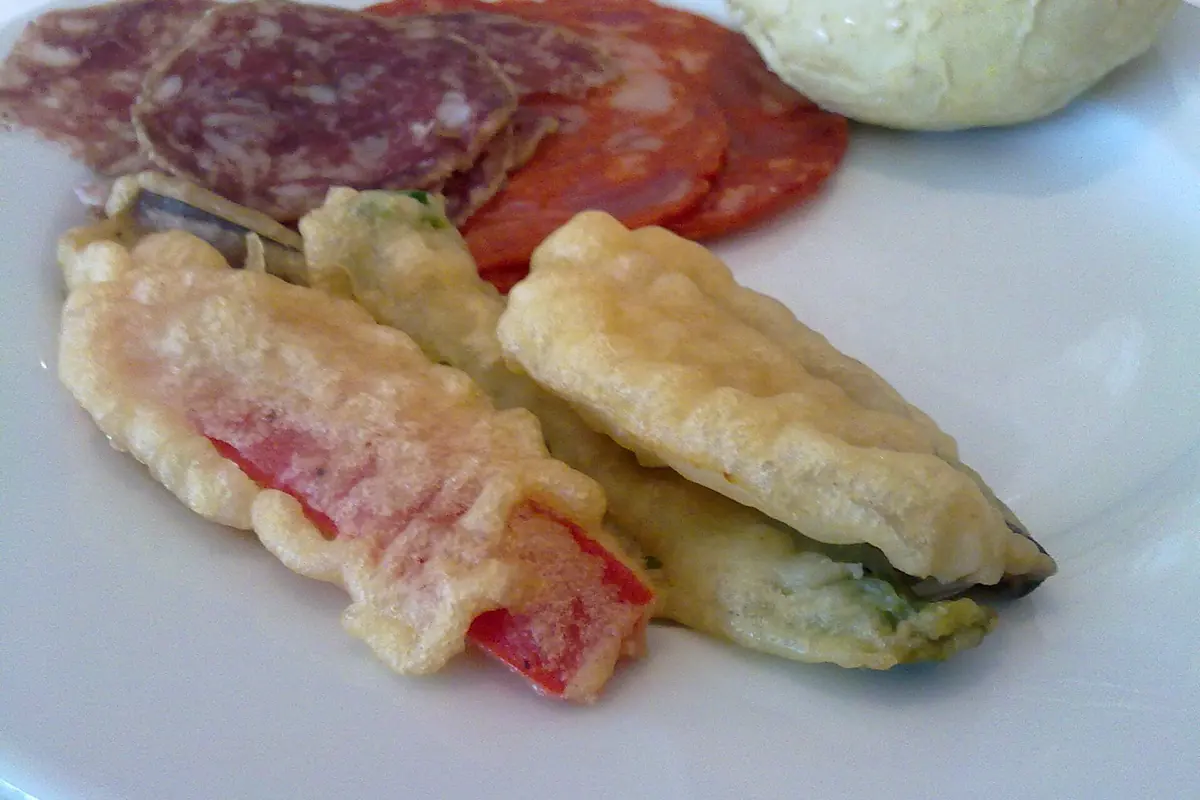
Portuguese Wikipedia lists petisco beside aperitivo, entrada and acepipe as names for a light preparation, simple or elaborate, served cold or hot before the main dish and normally with a drink. In a tasca or a fado house the word has a wider sense: small plates for the table, eaten slowly and shared. The English word tapas is the closest translation, though petiscos are Portuguese, with their own dishes. The point is the sharing, which suits a long communal table.
Why they suit a fado night
A fado evening is long and has pauses, and small plates fit that shape. The booking page describes long shared tables and finger food, and Lonely Planet says the meal in a fado house is served during breaks between the songs. Petiscos arrive and disappear in those gaps without asking for a knife and fork or a full seated course. They also invite the passing of dishes, which is why the table etiquette of a fado house matters.
The plates the booking page names
The booking page names bean soup, peixinhos da horta, pataniscas and chouriço assado as examples of the food, and menus change, so these are examples and not a menu. Soup is a regular part of a Portuguese meal; Wikipedia says lunch and dinner usually include one. Beans feature in many Portuguese soups and stews. The other three are described in the next sections, with Wikipedia as the source for what each is made from.
Peixinhos da horta
Peixinhos da horta means little fish from the vegetable garden. Wikipedia says the name comes from the way the dish resembles small pieces of colourful fish, and that it is usually prepared with green beans in a wheat-flour batter, then deep-fried, with other vegetables such as bell peppers and squash also used. Wikipedia adds that Portuguese sailors introduced it to Japan in the sixteenth century, and that it later gave rise to tempura.
Pataniscas
Wikipedia describes a patanisca as a typical Portuguese dish, usually made by frying shredded bacalhau, salt cod, in a purée of wheat flour, onion and egg, seasoned with salt, parsley or pepper. It adds that different recipes today also include other fish, seafood or vegetarian alternatives. The fritters are roughly 8 to 12 centimetres across, and their shape is irregular, so no two are alike. They are eaten warm, which is why they suit a table where plates keep arriving.
Chouriço assado
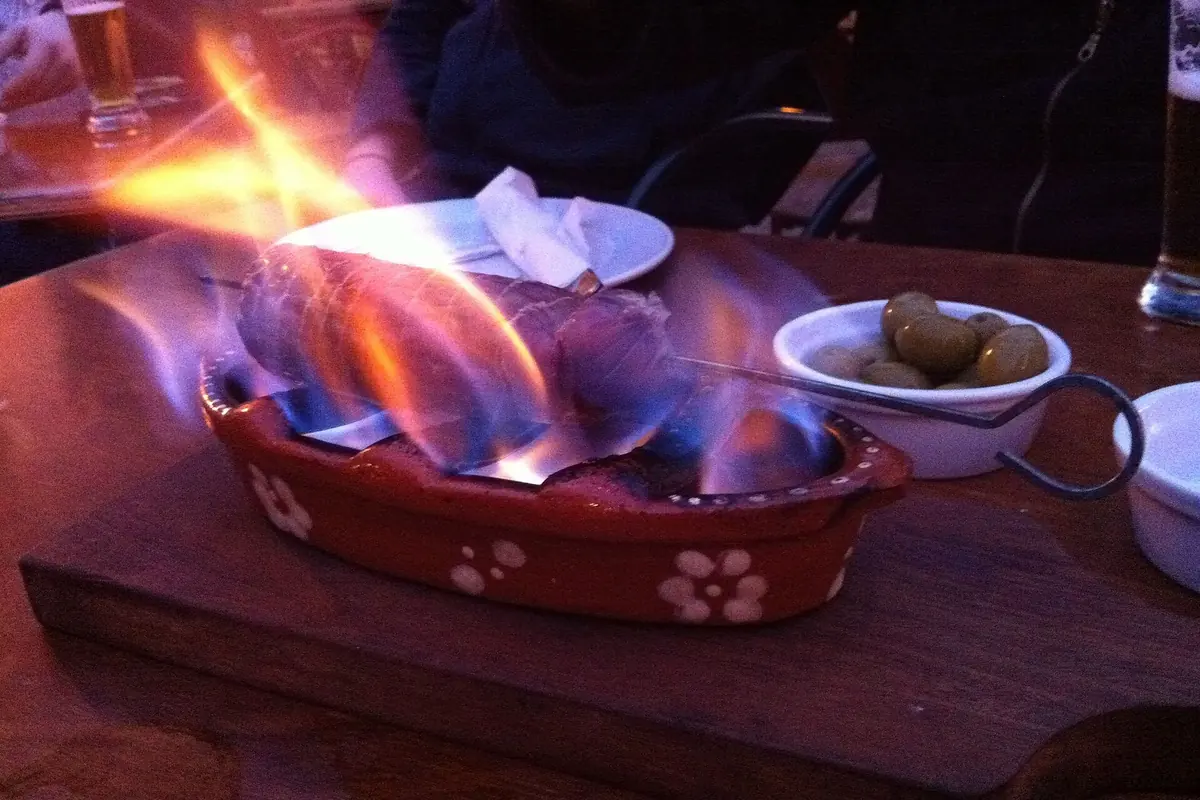
Chouriço is a Portuguese smoked sausage. Wikipedia says it is made at least with pork, fat, paprika, garlic and salt, with wine and sometimes pepper in some regions, packed into natural casings and dried slowly over smoke, and it should not be confused with Spanish chorizo. Assado means roasted, and the sausage is commonly flamed in a clay dish, as in the photograph here. It is a shared plate that draws the eye.
If you eat differently
The booking page for the tapas night lists no dietary information. Fado houses are built around traditional Portuguese dishes, and Lonely Planet cautions that some now offer vegetarian or vegan dishes but that these may disappoint because that is not their core cuisine. If you are vegetarian, vegan, coeliac or have an allergy, raise it with the provider via the booking page first, and do not assume the kitchen can change the plates on the night.
Frequently asked questions
What are petiscos?
Petiscos are Portuguese small plates made for sharing with a drink, in the way tapas are shared in Spain.
What are peixinhos da horta?
Wikipedia describes them as green beans, and sometimes other vegetables, fried in a wheat-flour batter.
What are pataniscas?
Wikipedia describes them as fritters usually made by frying shredded salt cod in a batter of flour, onion and egg.
Is the menu fixed?
No. The booking page names dishes as examples, and menus change, so treat the names as examples and not a promise.
Sources